
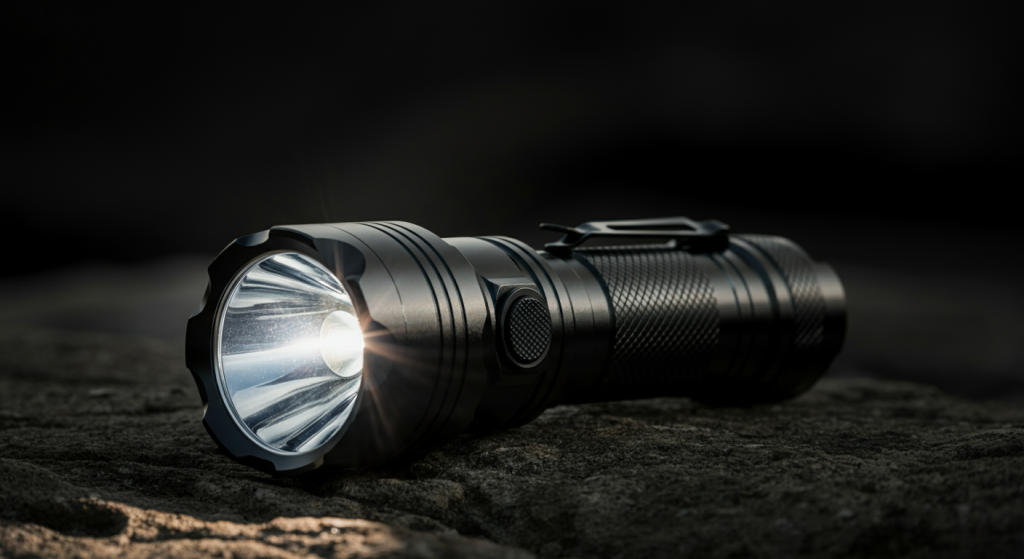
In a world full of unpredictable moments, having reliable illumination isn’t just a convenience – it’s a necessity. Whether you’re navigating a power outage, searching for dropped keys in the dark, exploring the great outdoors, or facing a critical self-defense scenario, a high-quality tactical flashlight can be your most trusted companion. These aren’t just ordinary flashlights; they’re engineered for performance, durability, and versatility, designed to withstand the toughest conditions and deliver unparalleled light when you need it most.
As technology advances, so do the capabilities of these essential tools. The market for tactical flashlights in 2024 is more competitive and innovative than ever, offering a dazzling array of options that promise incredible brightness, extended battery life, and bomb-proof construction. But with so many choices, how do you cut through the marketing hype and find the absolute best tactical flashlight for your specific needs?
That’s precisely what we’re here to help you discover. This comprehensive guide will dive deep into what makes a tactical flashlight truly exceptional, break down the key features you should prioritize, and present our top picks for the best tactical flashlights of 2024. Our goal is to equip you with the knowledge to make an informed decision, ensuring you choose a light that not only illuminates your path but also empowers you with confidence in any low-light situation. Let’s shed some light on the subject!
What Makes a Flashlight “Tactical”? Defining the Essentials
The term “tactical” isn’t just a buzzword; it refers to a specific set of characteristics that differentiate these flashlights from your average household torch. A true tactical flashlight is designed for demanding situations, prioritizing reliability, performance, and robust construction. It’s built to be an indispensable tool for professionals, outdoor enthusiasts, and anyone serious about preparedness.
Durability and Construction
One of the hallmarks of a tactical flashlight is its ability to endure harsh treatment. This means it’s typically constructed from aircraft-grade aluminum or other high-strength alloys, making it resistant to impacts, drops, and crushing forces. Look for features like anodized finishes for scratch resistance and knurling for a secure grip, even when wet.
Additionally, excellent water and dust resistance are non-negotiable. Most tactical flashlights boast an IPX-rated ingress protection, often IPX7 or IPX8, meaning they can withstand submersion in water for a certain period. This ensures they continue to function in rain, snow, or even if accidentally dropped into a puddle.
High Output and Beam Performance
While brightness (measured in lumens) is important, a tactical flashlight offers more than just sheer power. It provides a focused, intense beam capable of illuminating distant objects or temporarily disorienting an aggressor. Many tactical lights feature multiple brightness modes, including a “strobe” mode for signaling or defense, and a “low” mode for preserving night vision and extending battery life.
The quality of the beam, often described by its “throw” (how far it reaches) and “spill” (the wider, less intense light around the hotspot), is also crucial. A good tactical light balances these, offering both a powerful hotspot for distance and enough spill to maintain situational awareness.
Reliable Power Source
Tactical flashlights rely on powerful and efficient battery systems. While some may use readily available AA or AAA batteries, the most common and preferred power source for high-performance models is rechargeable lithium-ion (Li-ion) batteries, specifically 18650 or 21700 cells. These offer higher voltage, greater capacity, and a longer shelf life compared to alkaline batteries.
Integrated charging ports (like USB-C) are increasingly common, adding convenience. However, some purists prefer external chargers for better battery health and the ability to swap out depleted batteries quickly in the field.
Ergonomics and User Interface (UI)
A tactical flashlight must be easy to operate, especially under stress. This means intuitive controls, often featuring a tail-cap switch for momentary or constant-on activation, and a side switch for mode changes. Some models offer programmable modes or instant access to “turbo” or “strobe” settings.
The design should also facilitate comfortable handling, even with gloves, and allow for various grip techniques. A well-designed tactical flashlight feels like an extension of your hand, not an awkward tool.
Strike Bezel/Self-Defense Features
Many tactical flashlights incorporate a “strike bezel” – a crenellated or pointed front edge – designed for self-defense or breaking glass in an emergency. While not all tactical lights have this feature, it’s a common indicator of a tool designed with practical applications beyond simple illumination. This feature adds another layer of utility, making the flashlight a multi-purpose device.
Key Features to Consider When Choosing Your Tactical Flashlight
Selecting the best tactical flashlight requires understanding the specifications and how they translate to real-world performance. Don’s just chase the highest lumen count; consider how each feature aligns with your intended use.
Lumens vs. Candela: Understanding Brightness and Throw
* Lumens: This measures the total amount of visible light emitted by a flashlight. Higher lumens generally mean a brighter light overall. For general utility, 500-1000 lumens is excellent. For tactical use, 1000-2000+ lumens can be disorienting and illuminate larger areas.
* Candela: This measures the intensity of the brightest point in the beam, directly correlating to how far the light can “throw” or reach. A flashlight with high candela will have a tight, focused beam that travels a long distance, even if its total lumen output isn’t astronomically high. For long-range identification or signaling, high candela is more important than high lumens.
A good tactical flashlight often balances both, offering enough lumens for wide illumination and sufficient candela for distance.
Battery Type and Runtime: Powering Your Light
* 18650/21700 Li-ion: These are the gold standard for tactical flashlights. They offer high energy density, are rechargeable, and provide consistent power output. 21700 batteries are larger and generally offer even greater capacity and runtime than 18650s.
* CR123A: Non-rechargeable lithium batteries that offer excellent shelf life and perform well in cold temperatures. They are often used as a backup or in flashlights designed for compact size.
* AA/AAA: Easily accessible and affordable, but typically offer lower power output and shorter runtimes compared to Li-ion cells. Only suitable for lower-powered tactical lights or those where battery availability is paramount.
Always consider the runtime specifications at different brightness levels. A flashlight might boast 2000 lumens, but if it only runs for 30 minutes on that setting, it might not be practical for extended use.
Beam Profile: Flood vs. Spot
* Flood Beam: A wide, diffused light that illuminates a broad area up close. Excellent for general utility, searching rooms, or navigating trails where you need good peripheral vision.
* Spot Beam (Thrower): A tight, focused beam designed to reach long distances. Ideal for identifying distant objects, search and rescue, or signaling.
* Hybrid Beam: Many tactical flashlights offer a compromise, with a bright central hotspot for distance and a reasonable amount of spill for situational awareness. This is often the most versatile option.
Your primary use case will dictate which beam profile is most beneficial.
Size and Weight: EDC vs. Duty Use
* Everyday Carry (EDC): Compact and lightweight flashlights that fit comfortably in a pocket or on a belt. They prioritize portability and often balance brightness with smaller battery sizes. Ideal for daily tasks and unexpected situations.
* Duty/Tactical Use: Larger, more robust flashlights designed for professionals (law enforcement, military) or serious outdoor adventurers. They prioritize maximum output, extended runtime, and extreme durability, often at the expense of portability. These might be mounted on firearms or carried in dedicated pouches.
Consider how and where you intend to carry the flashlight. A behemoth of a light won’t be useful if it’s too cumbersome to have with you.
Material and Water Resistance: Built to Last
* Aircraft-Grade Aluminum: The most common material, offering an excellent balance of strength, lightweight properties, and heat dissipation. Look for Type III hard-anodized finishes for superior scratch and corrosion resistance.
* Stainless Steel/Titanium: Less common due to cost and weight, but offer even greater durability and corrosion resistance.
* Water Resistance (IPX Rating):
* IPX4: Splash resistant.
* IPX7: Submersible in 1 meter of water for 30 minutes.
* IPX8: Submersible in 2 meters or more for 30 minutes (or longer, depending on manufacturer specs). Aim for IPX7 or IPX8 for true tactical reliability.
User Interface (UI) and Modes: Simplicity vs. Versatility
* Tail-Cap Switch: Common for tactical lights, allowing for momentary activation (half-press) and constant-on (full-press). Some have dual tail-switches for instant access to strobe or turbo.
* Side Switch: Often used for mode changes (low, medium, high, turbo, strobe) once the light is on. Can also be a primary switch on some EDC models.
* Programmable Modes: Advanced UIs allow users to customize brightness levels or select specific mode groups, tailoring the flashlight to their preferences.
* Mode Memory: The flashlight remembers the last used brightness level.
* Instant Access: The ability to quickly jump to turbo or strobe mode from off, or from any other mode, is a critical tactical feature.
A good UI is intuitive and allows for quick, reliable operation, especially in stressful situations where fumbling with controls is not an option.
The Best Tactical Flashlights of 2024: Our Top Picks
After extensive research, considering performance metrics, user reviews, and overall value, we’ve compiled our list of the best tactical flashlights for 2024. These picks represent a range of categories, ensuring there’s an ideal option for every need and budget.
Best Overall Tactical Flashlight: The “Apex Beam Pro 3000”
The Apex Beam Pro 3000 stands out as our top pick for its exceptional balance of power, durability, and user-friendly design. It’s a true workhorse, built to excel in a multitude of demanding situations, from professional duty to serious outdoor adventures. Boasting an impressive 3000 lumens on turbo mode, it projects a beam that reaches over 400 meters, making it incredibly versatile for both wide area illumination and long-range spotting.
Its construction is robust, featuring aerospace-grade aluminum with a Type III hard-anodized finish, ensuring it can shrug off significant impacts and abrasions. The Apex Beam Pro 3000 is also IPX8 rated, meaning it can handle continuous submersion in water, making it reliable in the harshest weather conditions. Power comes from a high-capacity 21700 rechargeable Li-ion battery, providing extended runtimes, and it includes a convenient USB-C charging port for easy recharging on the go. The dual-switch tail cap allows for momentary and constant-on activation, with instant access to strobe and turbo modes, crucial for tactical applications. Its ergonomic design ensures a secure grip, even with gloves, and the strike bezel adds a layer of self-defense capability.
* Pros:
* Exceptional 3000-lumen output with long throw.
* Extremely durable aircraft-grade aluminum construction (IPX8 waterproof).
* Intuitive dual-switch UI with instant turbo/strobe access.
* Long-lasting 21700 battery with convenient USB-C charging.
* Balanced beam profile suitable for various tasks.
* Integrated strike bezel.
* Cons:
* Premium price point may be a barrier for some.
* Slightly larger and heavier than compact EDC options.
* Ideal for: Law enforcement, search and rescue, serious outdoor enthusiasts, home defense, and anyone seeking a top-tier, all-around tactical flashlight.